Heating
Radiator pipework renewal
When heating pipes leak, valves are stuck or rooms heat unevenly, it may be time to renew the radiator pipework. We renew the pipes, the valves and, if needed, the radiators, and balance the system so that heat is distributed evenly.
Price estimate based on the details of the site
Signs that the system is reaching the end of its life
The service life of a water-based radiator system is often estimated at around 50–60 years, but age alone does not decide it. What matters is the actual condition of the pipes, joints and valves. In many buildings built between the 1960s and the 1980s, the system is still original, and it is worth finding out its condition before problems start to pile up.
In older systems the pipes are often steel, and corrosion can progress on both the inside and the outside of the pipe. So a pipe that looks fine on the surface does not necessarily tell the whole story. When assessing the condition, we look not only at the pipes and joints but also at how the valves work, the expansion system and the quality of the circulating water.
- leaks or damp marks at joints or valves
- the system needs topping up with water repeatedly because the pressure drops
- radiator valves are stuck or thermostats do not respond to adjustment
- some rooms stay cold despite bleeding and adjustment
- dark, sludgy water comes out when the radiators are bled
Partial or complete renewal?
Not everything always needs renewing. Radiator valves usually wear out before the pipes, and if the pipes are in good condition, replacing the valves and balancing the system can considerably improve uneven heat distribution with much less work. Replacing individual radiators is covered in more detail on the radiator installation page. If a radiator only gurgles or stays cold at the top, try bleeding it first.
If the pipes have leaks or corrosion in several places, patching them will sooner or later cost more than renewal. In that case, it is worth planning the renewal of the whole system in one go, even if the work is carried out in stages.
When renewing, it is also worth re-sizing the system. If the building has had extra insulation added or the windows have been replaced, the heat demand may have fallen, and smaller radiators may be enough. An extension, on the other hand, increases the heat demand. Plan the schedule so that the building is not left cold during the installation – this is easiest outside the heating season.
Detached house or housing company
In a detached house, you decide yourself when the system is renewed. A natural time is, for example, when changing the heating system or during a larger renovation. If the house is switching from oil to a ground-source or air-to-water heat pump, the pipework and radiators should be sized for a lower flow temperature.
New pipes are usually surface-mounted, so the structures do not need to be opened up. Copper or composite pipe, for example, is used. Soldering copper is hot work, for which the installer holds a hot work card (Tulityökortti).
In terraced and apartment housing companies (taloyhtiö), the heating system is the housing company's responsibility. The project goes through the board and the property manager (isännöitsijä), and larger repairs are usually decided by the general meeting. Normally, a condition survey is done first, after which an HVAC designer draws up the plans. For large projects, the housing company often also hires a supervisor. If your housing company is asking for quotes, Solo-putkimies can give a quote based on the plans.
Price and household tax credit
Radiator pipework renewal is always priced as a quote. The price depends on the number of radiators and metres of pipe, whether the radiators are renewed too, the installation method and any boxing-in needed, and how easy it is to reach the pipe routes. For the quote, it helps to gather a floor plan, the number of radiators and any earlier condition survey. The more accurate the starting information, the more accurately the costs can be estimated.
The owner of a detached house can claim the household tax credit (kotitalousvähennys) for the labour part. In a housing company, the heating system is the company's maintenance responsibility, so a shareholder gets no deduction for its renewal – not even when paying their share through the maintenance charge (vastike) or otherwise personally. Only extra work that the shareholder orders and pays for directly to the contractor can qualify. Read more in our household tax credit guide, and estimate the deduction with the calculator on our prices page.
What the job includes
- Reviewing the condition and sizing of the existing system
- Draining the system and removing the old pipes
- Installing new heating pipes
- Renewing radiator and thermostatic valves
- Replacing radiators if needed
- Refilling, bleeding and checking for leaks
- Balancing the system
Charged separately / good to know
- Extra fittings and other materials are charged separately – ask for labour and materials to be itemised in the quote for the household tax credit.
- Boxing in pipes, painting and other building work are agreed separately.
- In housing company projects, the condition survey, design and supervision are procured separately by the housing company.
How to prepare
- Gather information on the year the building was built, the heating system and any earlier pipe renovations.
- Make a note of cold rooms and any leaks you have spotted.
- If you live in a housing company, contact the property manager and find out whether a condition survey has already been done.
- If possible, schedule the work outside the heating season.
- Make sure there is access to all rooms and to the heat distribution room or plant room.
Work examples
Photos from job sites
-
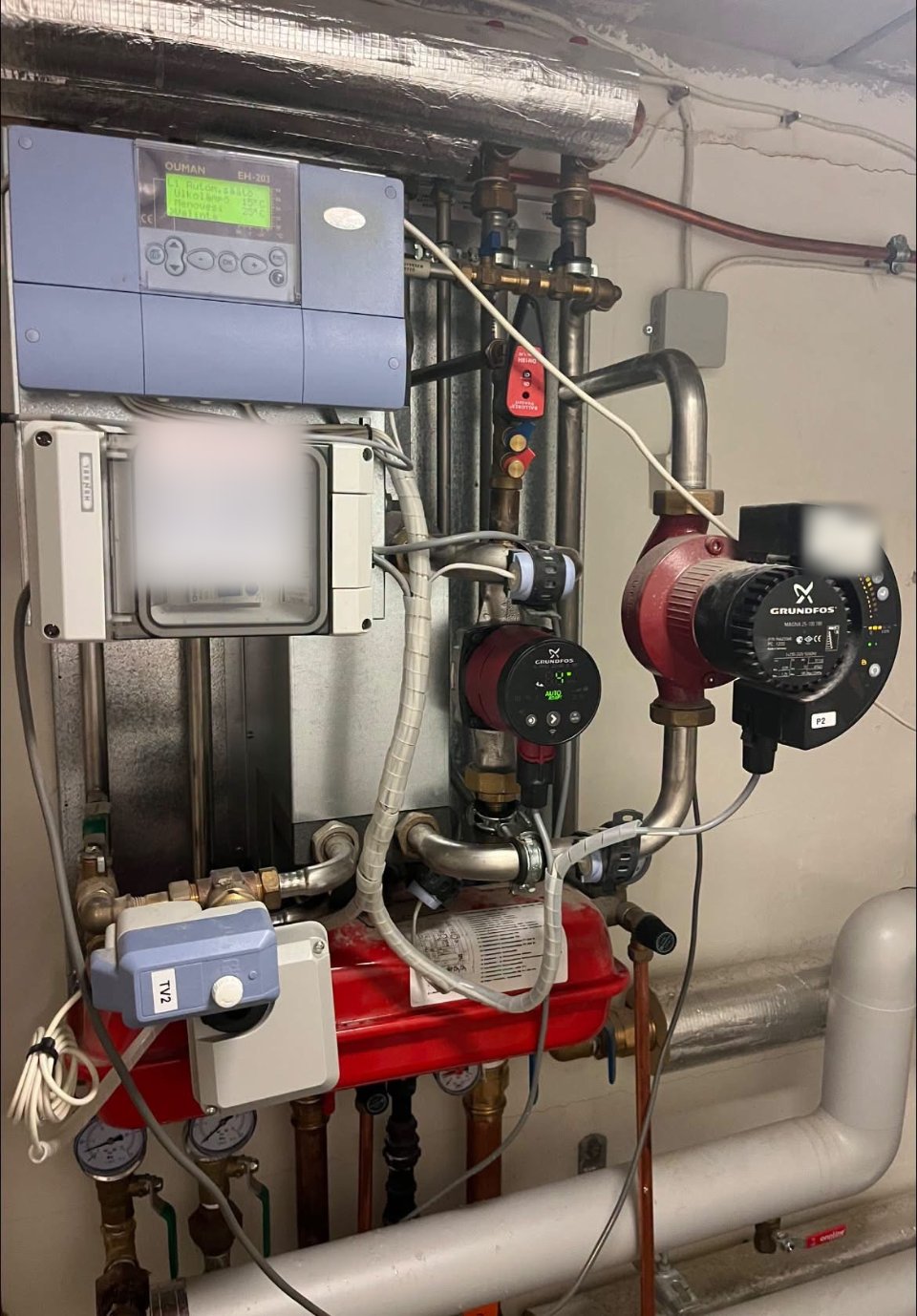
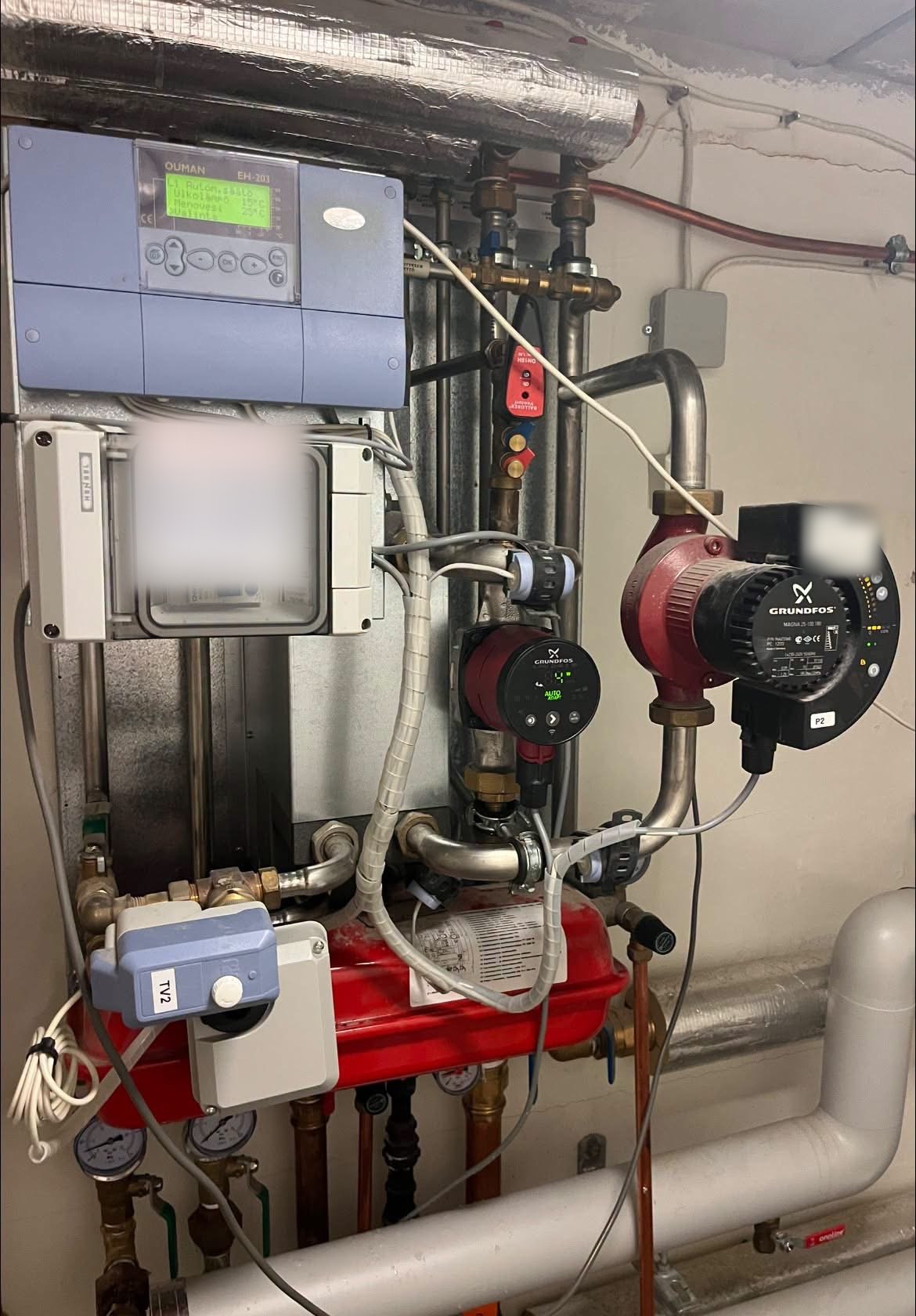
Heating pipework in a plant room
Heating system pipework, circulation pumps and valves in a heat distribution room (lämmönjakohuone). Work on a radiator network often involves this part of the system too.
-
Work examples
Need something similar done?
Tell us what needs doing. Jobs on the price list have a fixed price you know in advance; everything else is quoted individually.
Work stages
How the job goes
Starting information
Tell us the age of the building, the heating system and the problems you have noticed. For a housing company project, the quote is based on the plans and tender documents.
Site visit and quote
We go through the site in person. You receive a quote with labour and materials itemised.
Installation
The system is drained, the old pipes and valves are removed and the new ones are installed in the agreed order.
Commissioning and balancing
The system is refilled, bled and checked for leaks. Finally, the valves are adjusted so that each radiator gets the right amount of hot water.
FAQ · Heating pipework
Frequently asked questions
How much does radiator pipework renewal cost?
The price is always given as a quote, because sites differ a lot. The main factors are the metres of pipe and the number of radiators, whether the radiators are renewed at the same time, the installation method and any boxing-in needed. You get the most accurate price once we have been through the site in person. In a detached house, you can claim the household tax credit (kotitalousvähennys) for the labour part, which reduces the final cost.
How long does a radiator system last?
The service life of a radiator system is often estimated at around 50–60 years, but the actual condition depends on the pipe material, the quality of the circulating water and how the system has been maintained. Some systems last longer, others need repairs sooner. Valves usually wear out before the pipes, so replacing them can be enough for a long time.
Can the system be renewed in parts?
Yes. For example, replacing only the radiator valves and balancing the system is a separate, smaller job, and pipes can also be renewed section by section. A staged renewal should still be planned as a whole, so that new and old parts work together and the same structures do not need to be opened up several times.
Who decides on radiator system renewal in a housing company?
The heating system is the housing company's (taloyhtiö) maintenance responsibility, so an individual shareholder cannot decide to renew it. The board usually prepares the project with the property manager (isännöitsijä), and larger repairs are decided by the general meeting. A condition survey and plans are normally commissioned for the project, and a supervisor may be hired for the work. As a shareholder, you can report any problems you have noticed to the property manager.
Can I get the household tax credit for radiator system renewal?
The owner of a detached house can get a deduction for the labour part. The deduction is currently 35% of the labour cost, the annual threshold you pay yourself (omavastuu) is €150 and the maximum is €1,600 per person per year. The government has proposed a temporary increase for 2026–2027, so check the current information on vero.fi. A shareholder gets no deduction for renewing a system that is the housing company's responsibility, even when paying their share through the maintenance charge or otherwise personally. Only extra work ordered and paid for directly to the contractor can qualify.
Guides
Related articles
-
Household tax credit for plumbing work in Finland (2026)
35% of the labour cost, a €150 threshold and a €1,600 cap: how the Finnish household tax credit works for plumbing work, with worked examples. Read the article -
Renovation notice to your housing company for plumbing work
Own a flat in Finland? Before some plumbing jobs you must notify your housing company in writing. Here is how the system works and what to include. Read the article -
How to bleed a radiator: a step-by-step guide for Finnish homes
Gurgling and a radiator that stays cold at the top usually mean trapped air. How to bleed a radiator, and what to check when that doesn't solve the problem. Read the article
Contact
Request a quote or ask a question
The form already has this service selected: Radiator pipework renewal. Tell us briefly about the site – a photo helps us assess the job.
Service area: Helsinki, Espoo, Vantaa, Sipoo and nearby municipalities
Every day 6:00–20:00
Quote request
Step 1 of 6
You have an unfinished quote request
Thank you! Your quote request has been sent.
Your request has arrived. We’ll reply using the contact method you chose.
The details you sent
Your message is ready – choose how to send it
Your quote request has been put together as a message. Open it in your email or WhatsApp and press send.
Attach the photos you chose to the message or send them right after it.
Sending failed
Your details are still on this page. Try again or send the request another way.