Heating
Radiator installation and replacement
We replace and install water radiators, radiator valves and thermostats in detached houses and housing companies (taloyhtiö). The job also includes draining, refilling, bleeding and balancing the heating system, so that heat is distributed evenly between rooms.
Price estimate based on the details of the site
When is it worth replacing a radiator?
A water radiator lasts for decades, but sooner or later you run into a leak, a rusty surface or a valve that no longer controls the heat. Radiators are also often replaced during a renovation, when a room's use changes or the old model does not suit the new interior.
The whole radiator does not always need replacing. If a room is too cold or too warm, the cause is often the thermostatic valve or its setting. Replacing the thermostatic head is a small job, but replacing the valve body requires the heating system to be at least partly drained.
A working thermostat reduces the flow of water to the radiator when the sun, appliances or people warm up the room. A stuck thermostat does not react, so the room overheats and heating energy is wasted. Consider a replacement or a closer inspection if you notice any of the following:
- a leak or damp marks at the joints or valve
- the radiator heats unevenly even after bleeding
- the thermostat is stuck and the room temperature does not change when you adjust it
- the surface is rusty or the radiator is damaged
Choosing a radiator, and the price
The size of a new radiator is chosen according to the room's heat demand and the flow temperature of the heating system, not by appearance alone. A radiator that is too small will not keep the room warm in a hard frost.
If you are switching heating systems, for example from oil to a ground-source heat pump, it is worth checking the radiators at the same time. A heat pump works most efficiently at a low flow temperature, in which case old radiators may no longer give enough output.
You can buy the radiator yourself or agree that it is supplied as part of the job. Before buying, check the connection type (side or bottom connection) and the distance between the connections, so the new radiator fits the existing pipes. Because the number of radiators, the valves and the pipe changes vary, the price is always given as a quote. In a detached house, you can claim the household tax credit (kotitalousvähennys) for the labour part – estimate its effect with the calculator on our prices page. In a housing company, radiators are usually the company's maintenance responsibility, and then a shareholder gets no deduction, even when paying for the replacement personally.
Draining, refilling, bleeding and balancing
Before the old radiator is removed, the heating system or part of it is drained. Once the new radiator is connected, the system is refilled, the joints are checked and the system is bled. At the same time, we make sure the system pressure is right. After refilling, air can keep rising into the radiators for a few more days. In a detached house, you can bleed them again yourself with a radiator key – see how to bleed a radiator. In a housing company, this is usually done by the maintenance company (huoltoyhtiö).
Finally, the valves are adjusted. In balancing, each radiator is set to the right flow rate, so that the rooms furthest away get enough heat and the nearest ones do not overheat. In older systems, balancing has often never been done, and balancing alone can noticeably improve comfort. If the system is in poor condition overall, read more about radiator pipework renewal.
Soldering copper pipes is hot work. The installer holds a hot work card (Tulityökortti), and the work is carried out with fire risks in mind.
Replacing a radiator in a housing company
In terraced and apartment housing companies, radiators and the heating system are usually the housing company's maintenance responsibility. So first submit a renovation notice (muutostyöilmoitus) and agree on the replacement with the property manager (isännöitsijä). The housing company may require a specific radiator model or output.
In a block of flats, the heating water circulates through risers that serve several flats, so replacing even a single radiator may require shutting off and draining a riser. Draining and refilling are therefore arranged with the maintenance company, and neighbours are told about the shut-off in advance. If the housing company has a balancing plan, the new radiator's valve is set to the value in that plan.
What the job includes
- Removing the old radiator
- Draining the heating system or part of it
- Fixing and connecting the new radiator
- Installing or replacing radiator and thermostatic valves
- Refilling and bleeding the system and checking the pressure
- Checking that the joints are watertight
- Balancing the radiator valves
Charged separately / good to know
- Extra fittings and other installation materials are charged separately.
- You can buy the radiator yourself – check the connection type and the distance between the connections before buying.
- In a block of flats, draining the system is arranged with the maintenance company, which may invoice its own part separately.
- Taking away the old radiator is agreed at the quote stage.
How to prepare
- Find out whether the building has district heating, a ground-source heat pump or another water-based heating system.
- If you live in a housing company, submit a renovation notice and agree on the replacement with the property manager before ordering the work.
- Take photos of the current radiators and valves for your quote request.
- If you are buying the radiator yourself, check the connection type and measurements before buying.
- Clear working space around the radiator and move the curtains aside.
Work examples
Photos from job sites
-
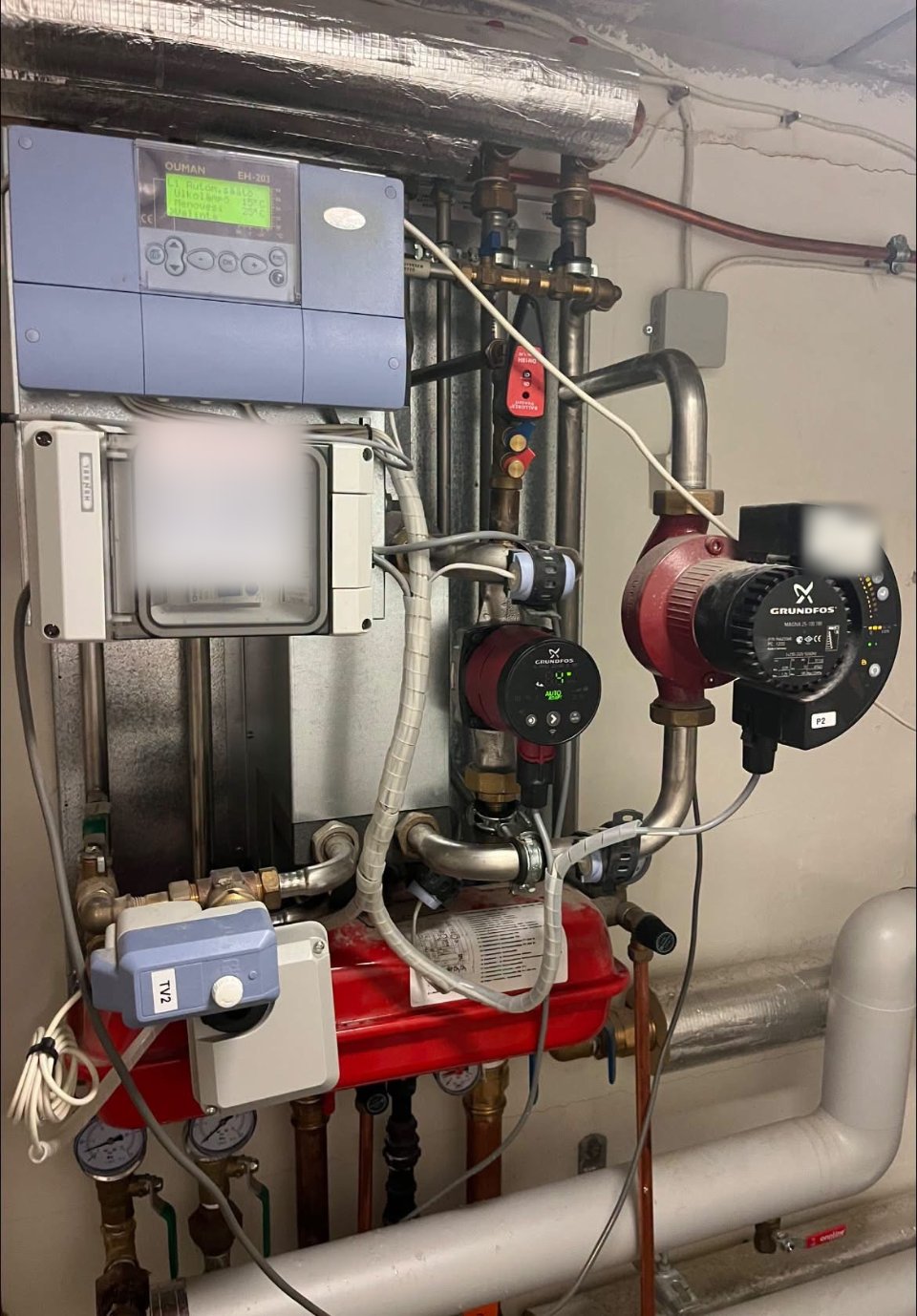
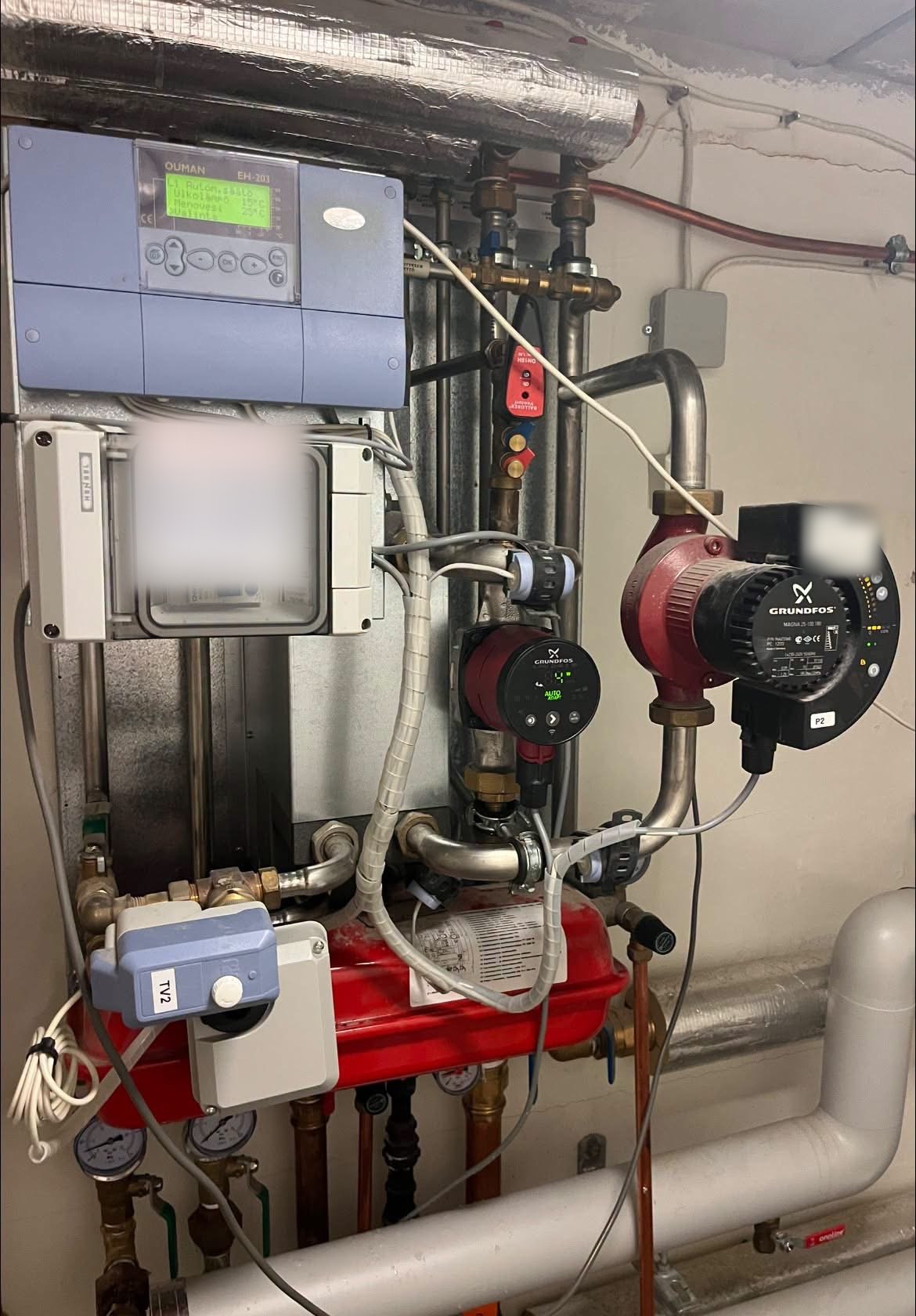
Heating pipework in a plant room
Heating system pipework, circulation pumps and valves in a heat distribution room (lämmönjakohuone). Work on a radiator network often involves this part of the system too.
-
Work examples
Need something similar done?
Tell us what needs doing. Jobs on the price list have a fixed price you know in advance; everything else is quoted individually.
Work stages
How the job goes
Get in touch
Tell us how many radiators are being replaced and what kind of heating system the building has. Photos of the radiators and valves help us assess the scope of the work.
Quote
You receive a quote showing labour and materials separately. The labour share is worth knowing for the household tax credit.
Installation
The system is drained as far as needed, the old radiator is removed and the new one is connected with its valves.
Refilling and balancing
The system is refilled and bled, the joints are checked and the valves are adjusted. Finally, we go through how to use the thermostat.
FAQ · Radiators
Frequently asked questions
How much does radiator replacement cost?
Radiator replacement is priced as a quote, because the amount of work varies a lot. The price depends on the number and size of the radiators, whether new valves are needed, how much of the system has to be drained and whether pipes need altering. Extra fittings and other materials are charged separately. In a detached house, you can claim the household tax credit (kotitalousvähennys) for the labour part.
Should I replace the whole radiator or just the thermostat?
If the radiator is intact and heats evenly, replacing just the thermostatic head or the valve is often enough. Replacing the whole radiator is justified when it leaks, is badly rusted or does not give enough heat for the room. It is worth assessing the situation before ordering, as a valve replacement is a much smaller job.
Can I replace the radiator in my flat with a model of my choice?
In a block of flats, radiators are usually the housing company's (taloyhtiö) maintenance responsibility, so you need the housing company's permission for a replacement. Submit a renovation notice (muutostyöilmoitus) and ask the property manager (isännöitsijä) whether there are requirements for the radiator model or output. The new radiator must suit the sizing of the system so that heating in other flats is not affected. Draining the system is arranged with the maintenance company (huoltoyhtiö).
What do bleeding and balancing mean?
Bleeding releases air that has collected in the heating system through the radiators' bleed screws. Air hampers the water circulation, so the radiator heats poorly and may make gurgling noises. Balancing means setting values on the radiator valves that distribute the hot water correctly between the radiators. When the system is balanced, rooms heat evenly and heating energy is not wasted.
Can I get the household tax credit for radiator replacement?
In a detached house, yes, for the labour part. In terraced and apartment housing companies, radiators are usually the housing company's maintenance responsibility, and a shareholder then gets no deduction, even when paying for the replacement personally. The household tax credit (kotitalousvähennys) is currently 35% of the labour cost, the annual threshold you pay yourself (omavastuu) is €150 and the maximum deduction is €1,600 per person per year. Materials are not deductible. The government has proposed a temporary increase for 2026–2027, so check the current information on vero.fi.
Guides
Related articles
-
Household tax credit for plumbing work in Finland (2026)
35% of the labour cost, a €150 threshold and a €1,600 cap: how the Finnish household tax credit works for plumbing work, with worked examples. Read the article -
How to bleed a radiator: a step-by-step guide for Finnish homes
Gurgling and a radiator that stays cold at the top usually mean trapped air. How to bleed a radiator, and what to check when that doesn't solve the problem. Read the article
Contact
Request a quote or ask a question
The form already has this service selected: Radiator installation. Tell us briefly about the site – a photo helps us assess the job.
Service area: Helsinki, Espoo, Vantaa, Sipoo and nearby municipalities
Every day 6:00–20:00
Quote request
Step 1 of 6
You have an unfinished quote request
Thank you! Your quote request has been sent.
Your request has arrived. We’ll reply using the contact method you chose.
The details you sent
Your message is ready – choose how to send it
Your quote request has been put together as a message. Open it in your email or WhatsApp and press send.
Attach the photos you chose to the message or send them right after it.
Sending failed
Your details are still on this page. Try again or send the request another way.